The VOOPOO ARGUS Z3 Nano is shorter and wider than the ARGUS Z3, with the same 1100mAh battery capacity. Its current official page lists a higher output range, 5–30W versus the Z3’s 5–20W. That does not, by itself, establish access to every resistance function in the Multi-Ohm cartridge. 1 2 3
My main conclusion is that “Nano” describes a different shape more convincingly than an across-the-board reduction in size. It changes how the device occupies a pocket; it does not provide a documented battery-capacity upgrade.
Independent comparison of current official specifications, the Z3 manual and VOOPOO’s cartridge documentation, checked on 2 November 2026. No hands-on testing is claimed.
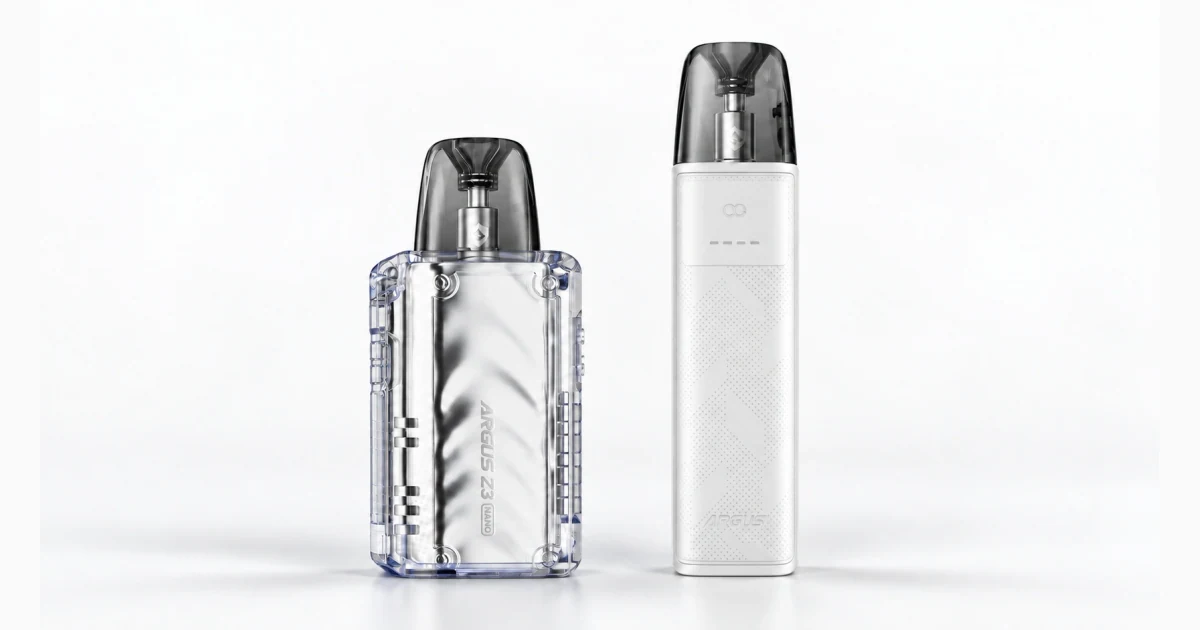
AI-generated editorial reconstruction based on official reference images, not a product photograph or scale drawing. Nano left, Z3 right; use the table for exact dimensions.
ARGUS Z3 Nano vs Z3 specifications
| Feature | ARGUS Z3 Nano | ARGUS Z3 |
|---|---|---|
| Height including pod | 95 mm | 113 mm |
| Width | 44.25 mm | 27.6 mm |
| Depth | 20.7 mm | 16.6 mm |
| Battery | 1100mAh | 1100mAh |
| Published output range | 5–30W | 5–20W |
| Listed body material | Transparent PC | PCTG + leather |
| Supplied cartridge, standard kit | ARGUS Multi-Ohm, 3.5 mL | ARGUS Multi-Ohm, 3.5 mL |
| TPD cartridge capacity listed | 2 mL | 2 mL |
| Charging information | USB-C; rate not specified on the reviewed model page | USB-C, 5V/1A |
The Nano also has a published body-only height of 69 mm. Comparing that figure with the Z3’s complete-device height would exaggerate the difference; the table uses pod-inclusive heights. 1 3
Shorter is not the same as smaller in every direction
Using the published dimensions, the Nano is 18 mm shorter, 16.65 mm wider and 4.1 mm thicker.
That is a substantial change in proportions. The original Z3 is a slim, elongated device. The Nano spreads its body across a broader, shorter rectangle.
I find this more informative than the model name. A shorter device can be less intrusive in a shallow pocket, while a narrower body can fit more easily beside other objects. Neither shape wins every carrying situation.
Dimensions establish the change in proportions, but not whether the broader body is more comfortable to hold.
For an existing Z3 owner, the relevant question is which part of the current shape causes inconvenience. If the objection is height, the Nano directly changes that. If the objection is thickness or width, its specifications move in the opposite direction.
The battery is unchanged; the output rating is not
Both devices list 1100mAh. The Nano’s upper output rating rises from 20W to 30W, a difference in published capability rather than a measured performance result. 1 2
Battery capacity and maximum output describe different specifications.
Neither figure establishes runtime in a matched comparison.
I also would not describe the Nano as offering a user-selectable 30W setting without documentation of that control. A rated range and an adjustable wattage menu are different features.
The charging information is similarly incomplete for comparison. The Z3 has a documented 5V/1A input, but the reviewed Nano product page does not state a charging rate. Copying the Z3 figure across because the batteries match would be an unsupported shortcut.

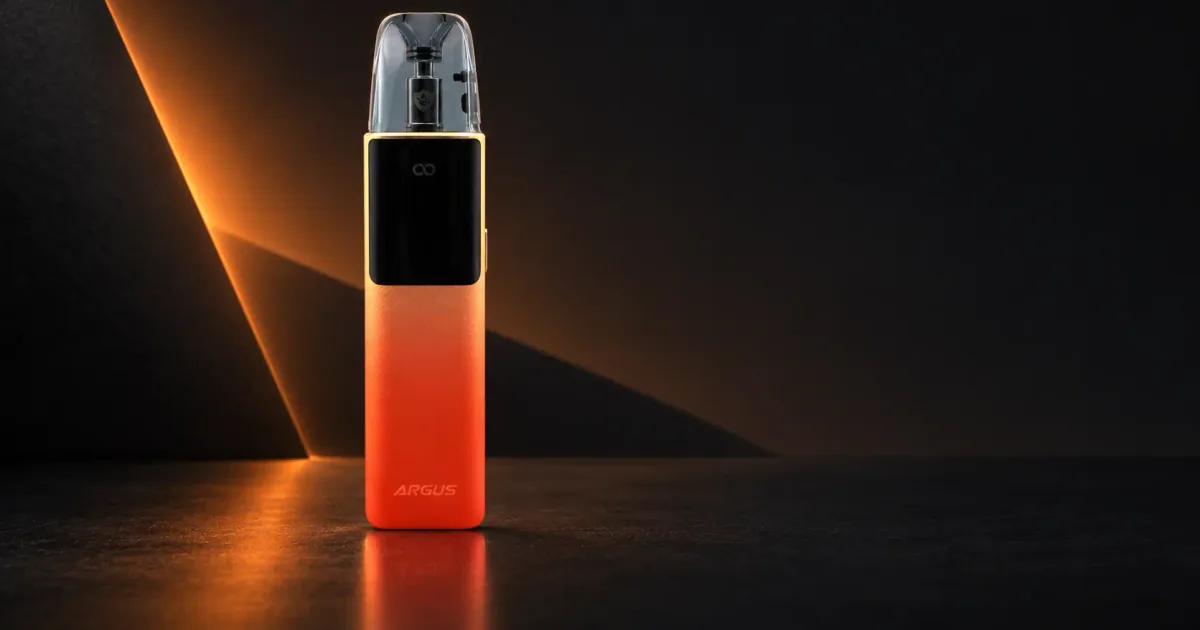
AI-generated editorial reconstruction, not a product photograph. The exterior view illustrates the transparent PC shell; fine construction details and internal circuitry are not verified by this image.
Multi-Ohm compatibility needs a device-specific answer
VOOPOO’s Multi-Ohm platform incorporates 0.4Ω, 0.7Ω and 1.0Ω configurations. The manufacturer explicitly limits 0.4Ω switching to the G4 and certain subsequent products. That qualification matters more than the broad family-compatibility headline. 4
| Question | What is confirmed |
|---|---|
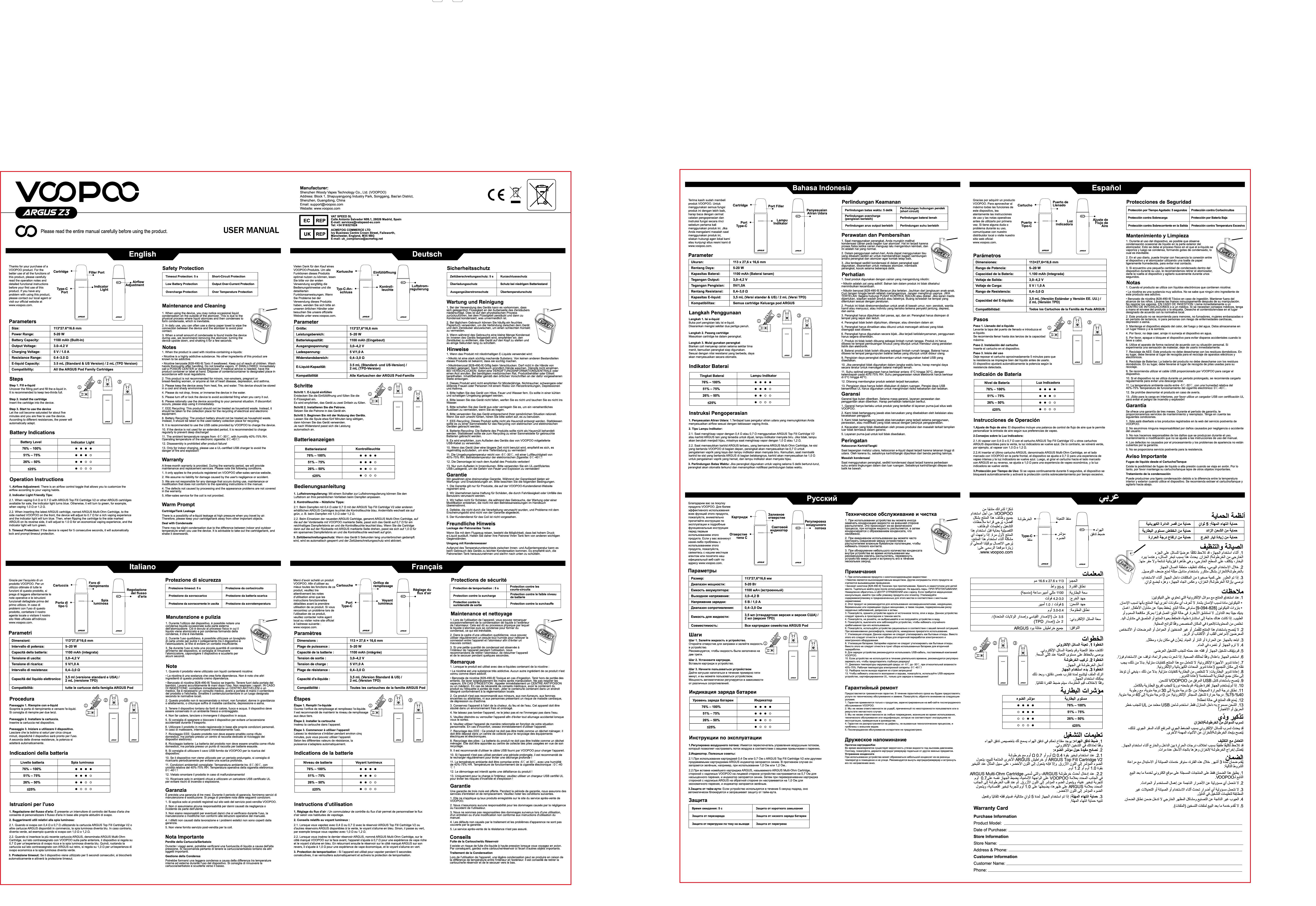
| Does the original Z3 support Multi-Ohm pods? | Yes; VOOPOO explicitly documents 0.7Ω/1.0Ω switching by cartridge orientation |
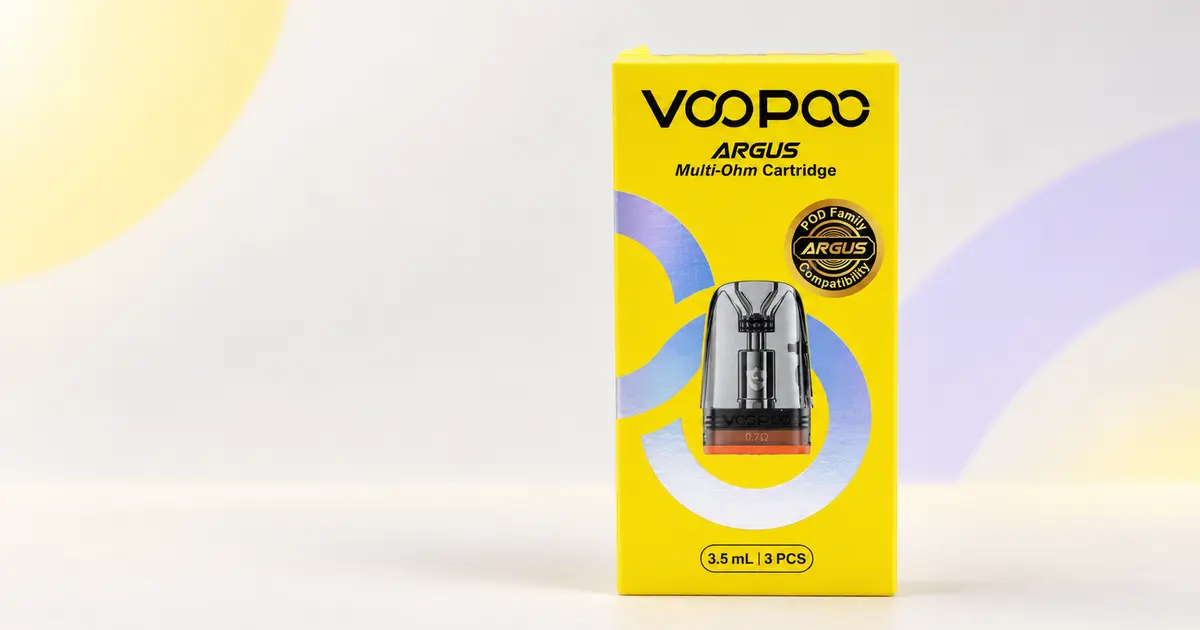
| What does Nano kit artwork identify? | A Multi-Ohm cartridge and 0.7Ω/1.0Ω markings |
| Is 0.4Ω selection confirmed for the Nano? | Not in the model-specific official material reviewed |
| Does the Nano’s 30W rating prove 0.4Ω switching? | No |
| Does a pod fitting establish every resistance function? | No; host-device support remains a separate requirement |
Sources: Z3 product page, Nano standard-kit artwork and the cartridge platform page. 2 4 5
The practical distinction is between physical fit, supported resistance selection and output behavior. A shared cartridge platform does not guarantee identical host functions.
The Nano model page does include a 0.4Ω entry under Cartridge Parameters. That is relevant evidence, but it describes cartridge specifications rather than an explicit Nano host-selection function. The same kind of 0.4Ω entry also appears on the Z3 page, even though its device-specific description identifies 0.7Ω/1.0Ω switching. The platform footnote therefore remains important: a cartridge entry alone does not settle host support. 1 2 4
The Nano page does not provide a detailed switching procedure, and no linked Nano manual was available in the official manual center when checked. I therefore leave 0.4Ω selection unconfirmed, not unsupported: confirmation requires model-specific instructions or manufacturer clarification.
Style: transparent construction versus a restrained slim body
The Nano’s listed body material is transparent PC. Official imagery shows ribbed edges, visible corner details and broad decorative panels. The original Z3 combines its slim body with a textured panel and a four-bar indicator arrangement. 1 2
To my eye, Aurora Silver emphasizes the Nano’s transparent shell and reflective surface without relying on an elaborate graphic. Pearl White gives the older Z3 a quieter appearance.
The Nano emphasizes its outer construction; the Z3 emphasizes its slim outline.
That is an assessment of appearance. The transparent housing should not be treated as evidence of either fragility or ruggedness, and the images do not establish scratch resistance.
Capacity and box contents still depend on the version
Both standard-kit lists specify one 3.5 mL Multi-Ohm cartridge. Their cartridge specifications also list a 2 mL TPD capacity. 1 2
The Nano’s current standard-package list includes a USB-C cable; the Z3’s does not list one. That is a useful packaging distinction, but it should be checked against the actual regional box rather than generalized to every shipment.
Exact regional package identification remains necessary; the ARGUS family name alone does not establish box contents.
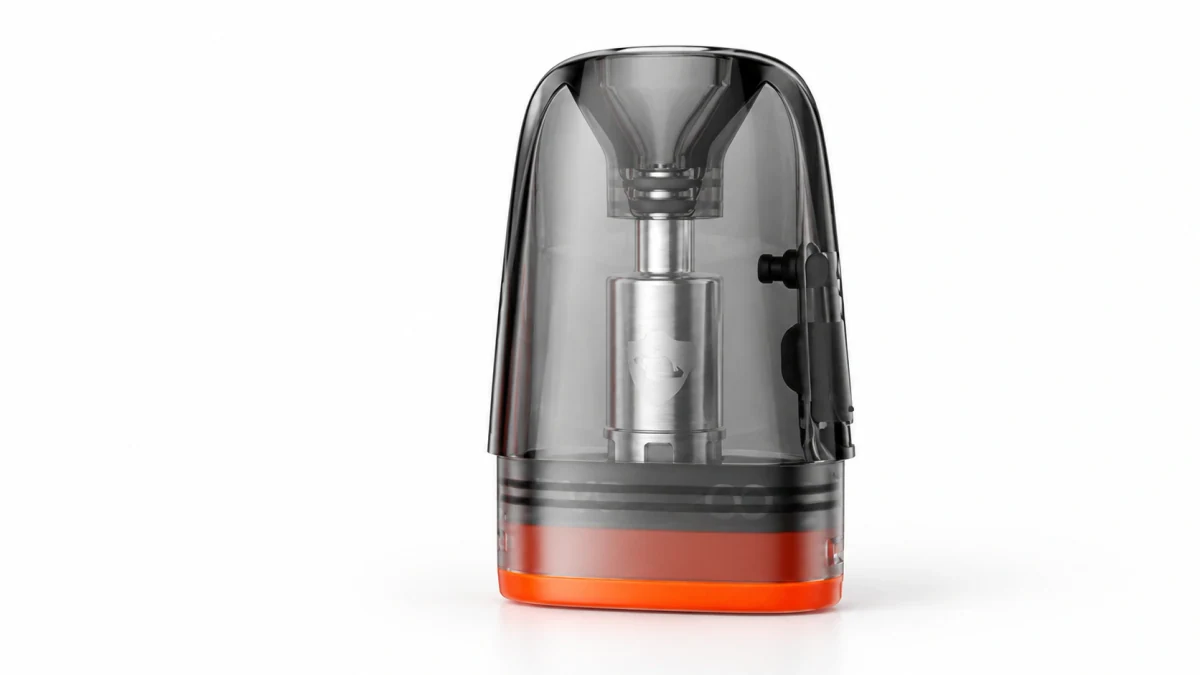
AI-generated editorial illustration of the cartridge exterior, not a product photograph or technical drawing. It does not establish host compatibility or support for all three resistance configurations.
Editorial verdict
The Z3 Nano changes the Z3 proposition chiefly through proportions, visual design and its published output ceiling. It does not add nominal battery capacity.
For an existing Z3 owner, I would evaluate the shorter, broader shape as the main difference. The additional output rating becomes relevant only alongside documented cartridge behavior. Until the Nano’s resistance-selection support is stated more explicitly, “30W” is not enough to turn it into a confirmed three-resistance upgrade.
Frequently asked questions
Is the ARGUS Z3 Nano smaller than the Z3?
It is shorter, but also wider and thicker. With pods included, the published dimensions are 95 × 44.25 × 20.7 mm versus 113 × 27.6 × 16.6 mm. 1 3
Does the Nano have a bigger battery?
Can the Nano use the Multi-Ohm cartridge’s 0.4Ω configuration?
The Nano page lists a 0.4Ω cartridge parameter, but does not explicitly confirm Nano-specific selection of that configuration. Neither that entry nor the 30W rating alone settles the host function. 1 4
Do both standard kits include a 3.5 mL cartridge?
Yes, according to the current standard-kit lists. A 2 mL TPD cartridge specification is also listed, so the exact regional package still matters. 1 2