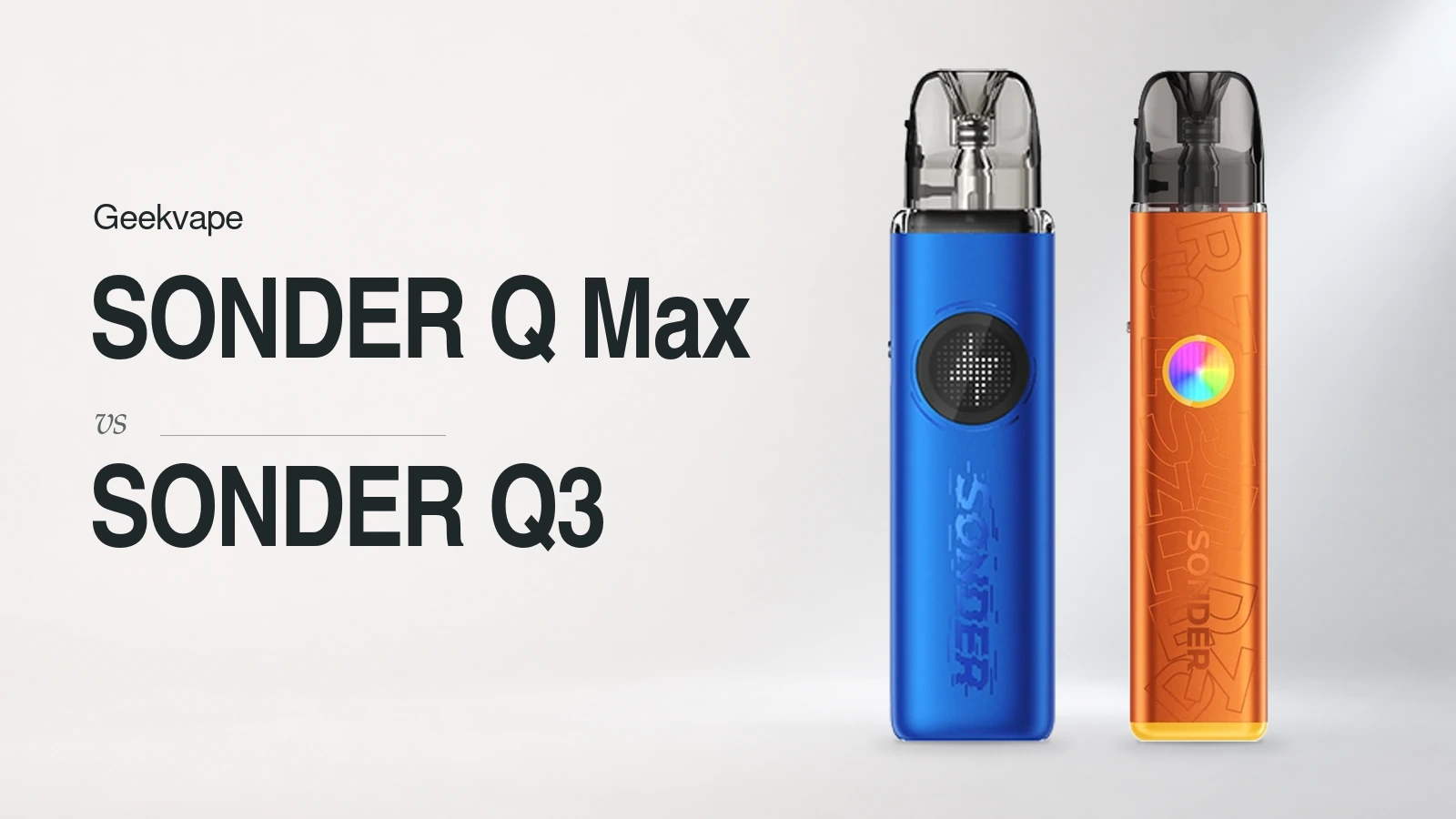
The first draw tells you how quickly a device starts. The next few tell you how well it keeps up. Geekvape VPU 2.0 addresses both with a revised wick, mesh heater and device control. Geekvape introduced the platform in Dubai on November 10, 2026, with the SONDER Q Max among the launch devices. [1]
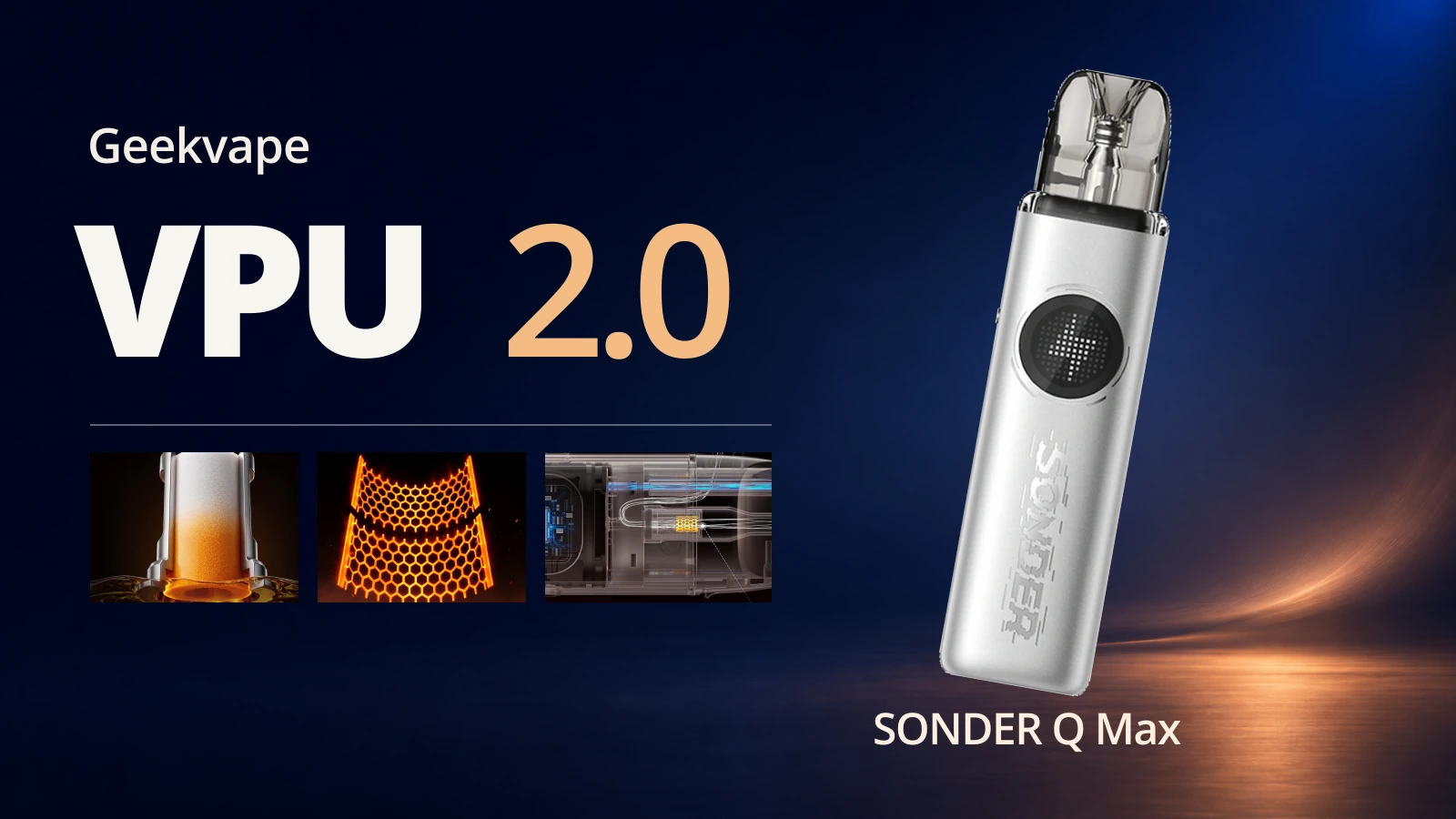
Geekvape’s SONDER Q Max is a launch example. The three details show the wick, mesh and startup control, from left to right.
What changes in VPU 2.0?
VPU stands for Vaping Processing Unit, Geekvape’s name for its atomization platform. Version 2.0 connects three jobs that happen in different parts of the system. [1] [2]
| Measurement | Geekvape result | Reference or test scope |
|---|---|---|
| Wicking speed | +25% | Earlier wick material |
| Area reached by liquid | +31% | Earlier wick material |
| Liquid absorbed | +17.1% | Earlier material, same wick volume |
| Effective atomization area | +28.2% | Earlier mesh |
| Vapor output | +29% | Comparable products in the test |
| Time to “flavor activation” | 0.01 s | Selected compatible devices |
All six results come from Geekvape’s internal tests. The first three describe the wick. The two figures for mesh area and vapor output use different comparisons. [1]
Wicking is the upgrade I’d watch first
After a draw, liquid has to travel back through the wick to the mesh. Geekvape revised the fiber surface and pore structure to help it get there. A wick that takes up more liquid at the same size can keep more near the heater. A pod marked 2 mL still has a 2 mL reservoir. [1]
If the first draw from a familiar pod tastes fine but the next few fade, replenishment is the change I’d pay attention to. I’d compare the same liquid and resistance at my usual pace. That tells me more about consistency than a quick first draw.
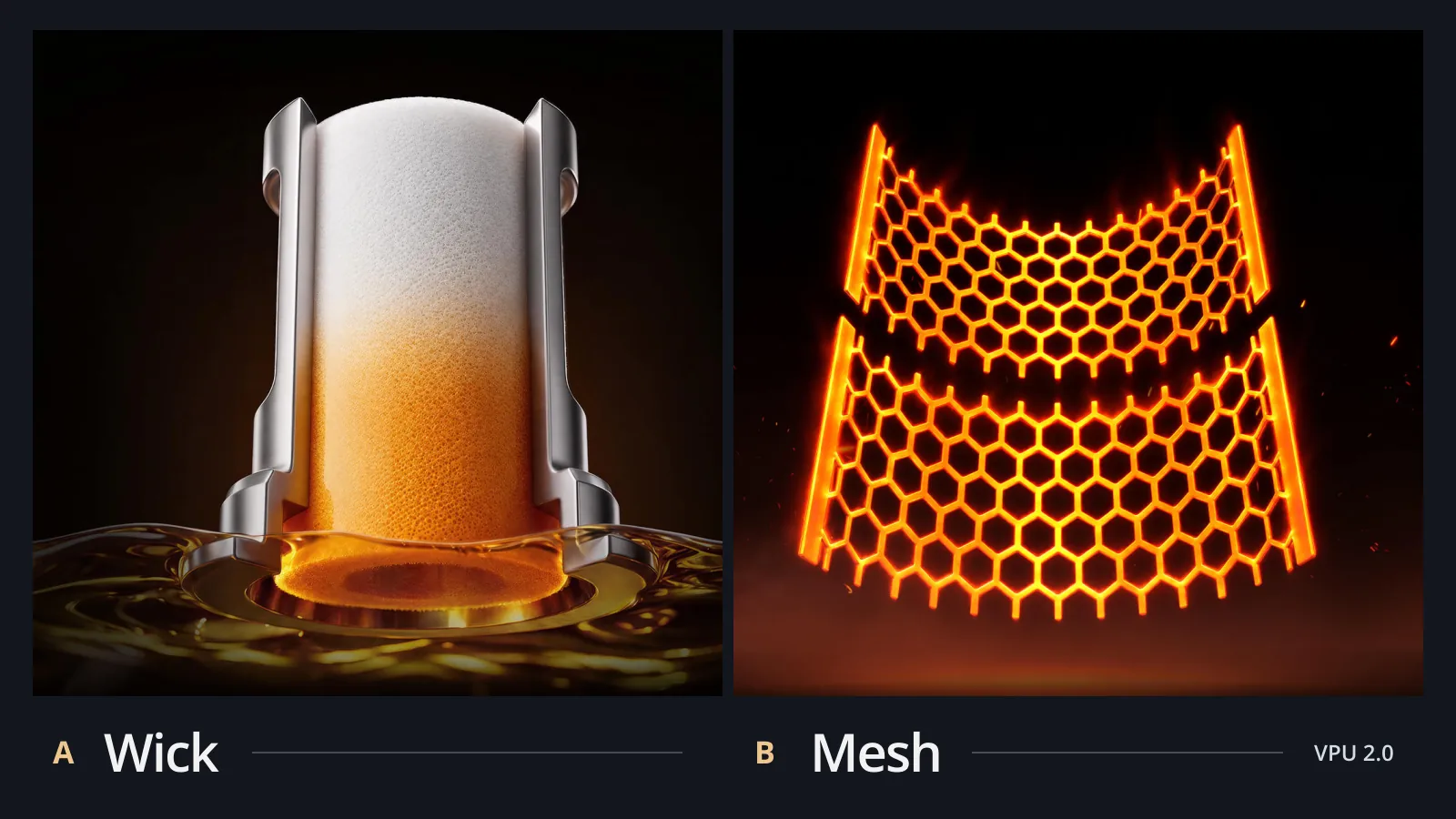
A shows the wick that feeds liquid to the heater. B shows the shaped mesh that distributes the heat. Both are manufacturer illustrations.
Mesh changes where the heat goes
Two cartridges marked 0.8 Ω can carry the same resistance rating and still distribute heat differently. Geekvape varies the thickness of sections of the mesh to change their local resistance. That makes the effective heating area the more informative of its two mesh figures. The separate vapor-output comparison leaves open how much difference you would notice at your usual airflow and power. [1]
Device control matters at the start of a draw
Geekvape says its AI-optimized startup control coordinates power with airflow as a draw begins. Its 0.01-second figure is the company’s timing for “flavor activation” on selected devices. The release names the SONDER Q Max as a VPU 2.0 model but does not give a separate timing for it. On the Q Max you can check one difference directly: moving the side slider between ECO and POWER also changes the airflow. A change in draw between those positions reflects both adjustments. [1] [3]
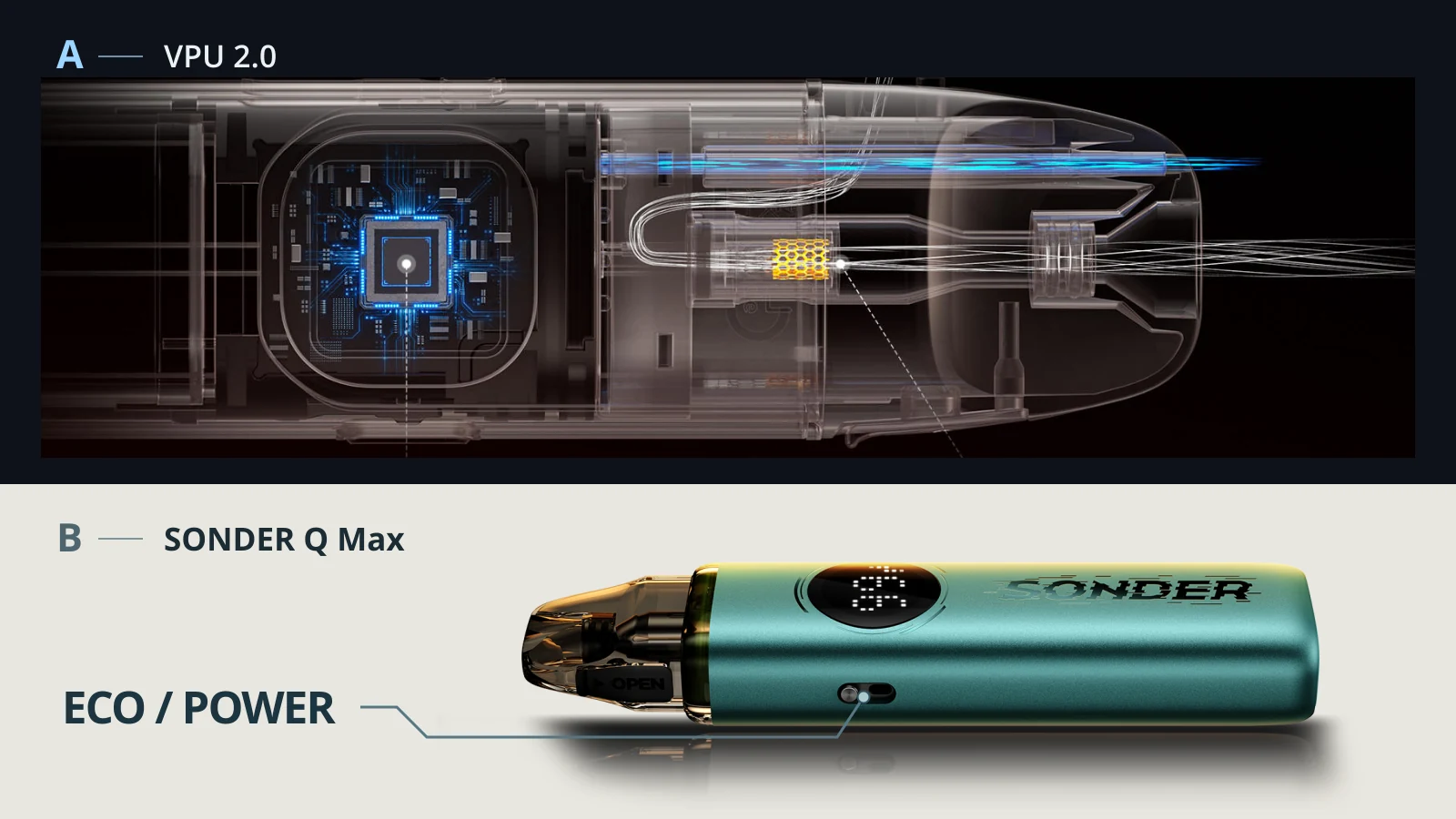
A is Geekvape’s illustration of the VPU platform. B shows the actual ECO/POWER slider on the SONDER Q Max.
What to check before buying a Q Cartridge
If you want the same pod that came installed, start with the box label. Geekvape lists 0.8 Ω, 3 mL, side-fill for the standard SONDER Q Max and 0.8 Ω, 2 mL, top-fill for the TPD kit. Both are rated 12–18 W. A 0.6 Ω Q Cartridge is a separate choice rated 18–25 W. The device also accepts 0.4 Ω and 1.2 Ω Q Cartridges. [4] [5]
Would I replace a working Q-series device for VPU 2.0 alone? I’d keep it if the draw already feels consistent. A Q Cartridge can fit more than one device, but fitting a new pod leaves the existing device’s power control and airflow design in place. For the differences in included pods, see the SONDER Q Max vs SONDER Q3 kit comparison.